Cam Switches Type F


Function:
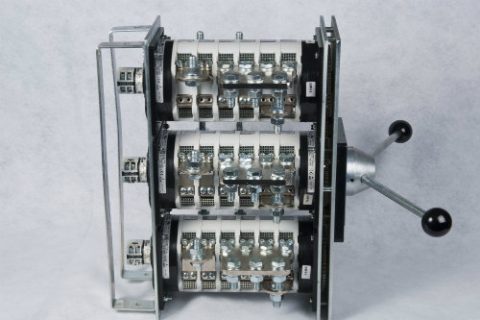
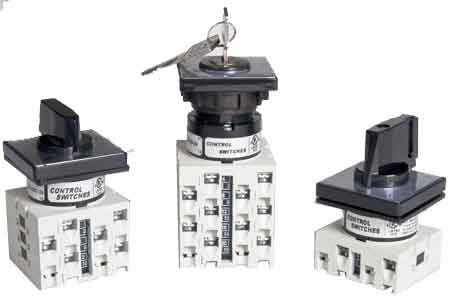
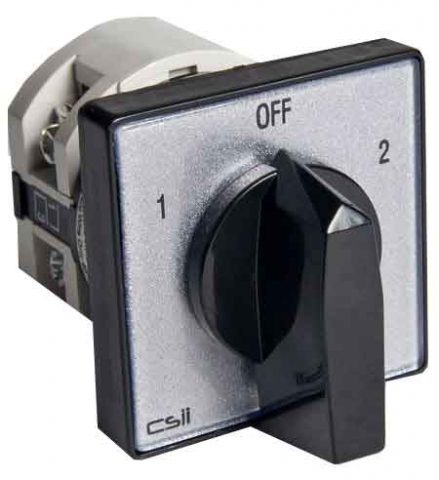
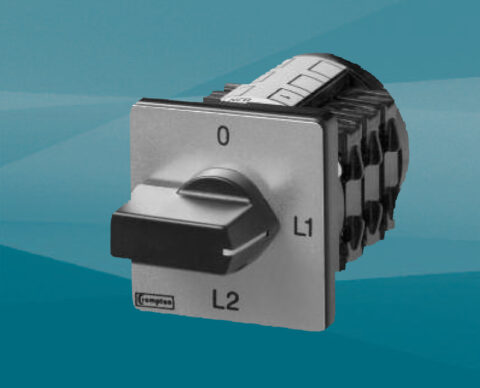
ROTARY CAM SWITCHES F SERIES is the new series of rotary cam switches protected from inadvertent touch (all
connections and possible short circuiting devices) – VDE 0106 part 100. They have been designed on modern principles
taking into consideration the latest achievements in the field of switching devices and using the best insulation and contact
materials. They distinguish themselves by their high breaking capacity, electrical and mechanical durability, and compact dimensions.
Where are they Used ?
Magnetic contactors find use in main and auxiliary circuits, including motor switches (for switching, control, and starting three-phase and single-phase motors) in utilization categories AC3 and AC23, and load-break switches (for switching non-inductive or slightly inductive loads) in utilization category AC15.
Rotary cam switches offer up to 12 control positions and turning angles of 30°, 45°, 60° and 90°. We supply F10 and F20 with gold-plated contacts.
Rotary cam switches series F comply with many international and national standards such as: IEC 60947, IEC 60204, DIN
EN 61058, UL 508, C22.2 No. 14 and many others.
Features:
- protected from inadvertent touch (all connections and possible short circuiting devices) – VDE 0106 part 100
- designed on modern principles
- best insulation and contact materials
- high breaking capacity, electrical and mechanical durability
- small dimensions
- up to a maximum 12 control positions
- turning angles of 30°, 45°,60° and 90°
- We supply F10 and F20 models with gold-plated contacts.
Applications:
- main and auxiliary circuits
- motor switch (switching, control and starting of three-phase and single-phase motors) in the utilization categories AC3 and AC23
- load break switch (for switching of non-inductive or slightly inductive loads) in the utilization category AC15
Approvals:
- UL 508
- IEC 60947
- IEC 60204
- DIN EN 61058
- C22.2 No. 14
- UL 508
- IEC 60947
- IEC 60204
- DIN EN 61058
- C22.2 No. 14